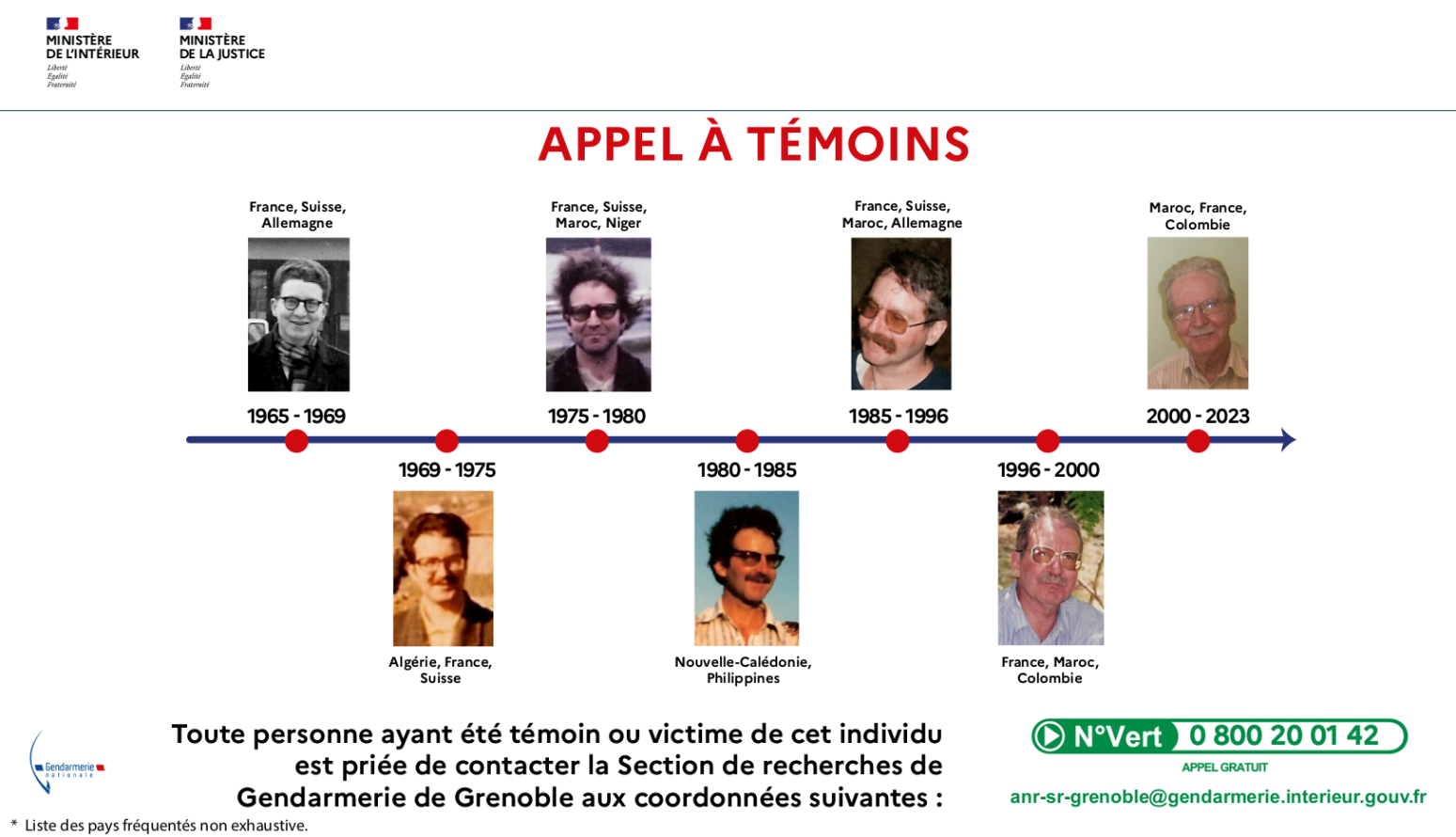
Jacques Leveugle was known to his community as a cultured, charismatic, and trustworthy man. He worked as a French teacher, an educator, and a climbing instructor. Because of his respected position, parents trusted him completely with their children.
However, behind closed doors, Leveugle was a predator. From 1967 all the way to 2022, he used his authority to manipulate and abuse at least 89 young boys (mostly aged 13 to 17). He didn't just operate in France; his crimes spanned across the globe, including New Caledonia, Germany, Switzerland, Morocco, Niger, Algeria, the Philippines, India, and Colombia.
He didn't use physical violence to control his victims. Instead, he used "moral coercion." He would act as a mentor, offering financial help or intellectual support, making the young boys feel like they owed him.
The Moroccan Connection: Khénifra
While his crimes spanned the globe, Morocco played a massive role in his dark history. Leveugle lived for several years in Khénifra, a city in central Morocco. To the locals, he was known as a polite, helpful, and cultured French teacher. To gain the trust of families and access to vulnerable boys, he organized free language classes and fully integrated himself into the local community.
Today, the Moroccan organization "Mat9ich Weldi" (Don't Touch My Child) is heavily involved in the case, calling for any victims or witnesses from Khénifra to come forward so they can provide psychological and legal support. Because the statute of limitations works differently in France versus Morocco, the crimes committed in Khénifra might be the key to keeping him in prison forever.
The USB Drive
Leveugle's crimes might have stayed a secret forever if it wasn't for a family member. His nephew found a USB drive belonging to his uncle. When he opened it, he found a massive, highly detailed digital diary—spanning 15 volumes. In this diary, Leveugle had carefully documented every single one of his 89 victims.
The Murders
When police finally arrested him in 2024, the investigation took an even darker turn. During questioning, Leveugle unexpectedly confessed to murder. He admitted that he had killed his terminally ill mother and his elderly aunt, launching a completely separate homicide investigation.
Because many of the crimes happened decades ago, prosecutors are now fighting against the statute of limitations. In February 2026, the Grenoble prosecutor released his name to the public, hoping that more victims in places like Morocco and the Philippines might finally come forward.
Note from DOSSIER 212:
It is deeply alarming that the Moroccan mainstream media has remained largely silent on this case. There are men today—once vulnerable children in Khénifra—who have grown up carrying this trauma and suffering in complete silence.
Without widespread media coverage, these victims may never know that their abuser has finally been caught, and they may not realize that they now have the power to step forward and file a formal complaint.
True journalism requires shining a light into the darkest corners. It is the fundamental duty of the press to amplify these cases—not for sensationalism, but to ensure that justice is served and victims are given a voice.